

The Multifaceted Impact of El Niño and the Climate Economy in the State
Dipendu Chowdhury
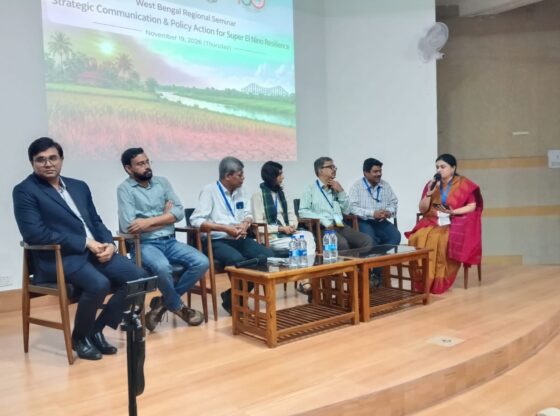
Cyclone ‘Akvan’ has made landfall near Gopalpur in Odisha. This was highlighted during a discussion held on Thursday, jointly organized by Climate Trends, the India Meteorological Department (IMD), and Jadavpur University. It was warned that the impact of a ‘Super El Niño’ will be felt during the 2026–27 climate-financial year. Currently, the outer bands of Cyclone Akvan are causing unsettled weather, with scattered rainfall reported across most districts of South Bengal. During Thursday’s discussion, a warning for heavy rainfall was issued, noting that South 24 Parganas and East Medinipur districts could receive between 7 and 20 centimeters of rain. Cloudburst-like conditions could potentially lead to flooding in some areas. The rainfall this week, accompanied by coastal winds reaching speeds of 40–50 km/h, highlights the influence of El Niño; in the coastal regions of West Bengal, wind speeds reached 60 km/h.
A ‘Super El Niño’ is expected in 2027. Research by the India Meteorological Department and various global climate organizations indicates that the region will be significantly affected by this phenomenon in 2027. Approximately 190 environmental experts have raised concerns about this, warning of potential consequences such as extremely hot summers, deficient monsoons, heatwaves, increased coastal salinity, and disruptions to agricultural production. Consequently, meteorologists, scientists, and experts are urging for proactive and urgent measures to be taken.
Speakers at the discussion included Dr. Habibur Rahman Biswas, Regional Head of the India Meteorological Department in Kolkata; Professor Tuhin Ghosh of Jadavpur University; Dr. Goutam Saha, a professor at Bidhan Chandra Krishi Viswavidyalaya in Kalyani; and Abhishek Acharya, a Director at the Union Ministry of Environment, Forest and Climate Change.
The India Meteorological Department had issued warnings earlier this week regarding Cyclone Akvan. Special precautions were taken in the port areas. In this context, plans could be formulated regarding agricultural income in the districts of West Bengal. Experts believe that, in preparation for a potential ‘super El Niño’ next year, it is essential to develop agricultural guidelines and establish effective public outreach.