


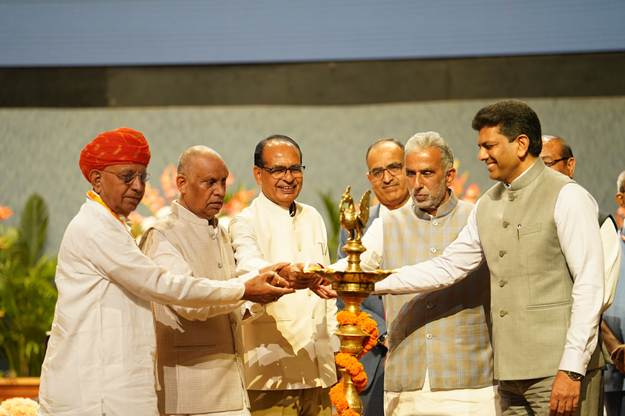
When policies are shaped by ground realities and all government departments work together in one direction, no district can be left behind in the race for development. This is the hallmark of Prime Minister Shri Narendra Modi’s model of good governance, Union Minister for Agriculture and Farmers’ Welfare and Rural Development Shri Shivraj Singh Chouhan said on Monday. He was addressing the national conference on the Prime Minister Dhan-Dhaanya Krishi Yojana at the Bharat Ratna C. Subramaniam Auditorium in the Pusa campus, New Delhi. Addressing district collectors, scientists and senior policymakers from more than 50 districts across the country, Shri Chouhan extended his greetings on the auspicious occasion of Navratri and felicitated districts that had demonstrated outstanding performance. He urged officials to devote their full energy to realising Prime Minister Shri Narendra Modi’s vision of a developed and prosperous India.
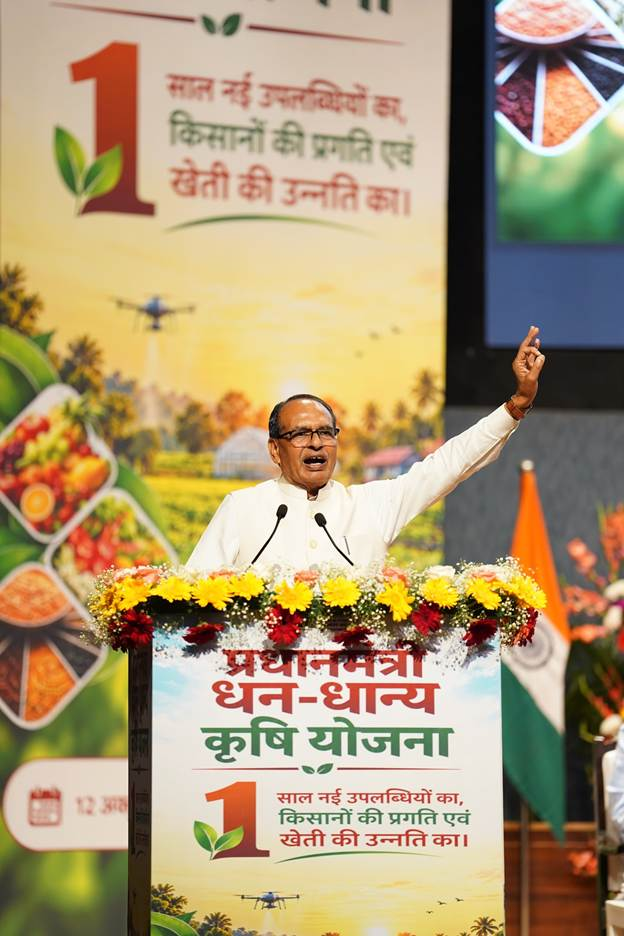
Emphasising the importance of localised planning, Chouhan said the framework for the PM Dhan-Dhaanya Krishi Yojana had been prepared by district collectors based on actual ground conditions rather than being drawn up in offices in Delhi. He stressed the need for regular monthly reviews, asking collectors to assess progress on their district agricultural action plans every month along with their teams. Where progress is slow, coordinated efforts across departments should be intensified to accelerate implementation. Highlighting the importance of inter-ministerial convergence, Shri Chouhan said farmers’ incomes could be increased manifold by bringing together the efforts of different ministries and institutions. These include the Ministry of Jal Shakti for water management; the Ministry of Food Processing Industries for processing and value addition; the Ministry of Cooperation and Farmer Producer Organisations for strengthening collective efforts; and the sectors of animal husbandry, dairy, fisheries, MSMEs and skill development. He also emphasised the need to strengthen the direct connection between agricultural research and farmers. Research conducted by nearly 16,000 scientists associated with the Indian Council of Agricultural Research, along with the work of Krishi Vigyan Kendras, the Agricultural Technology Management Agency and agricultural universities, should reach farmers’ fields directly.
